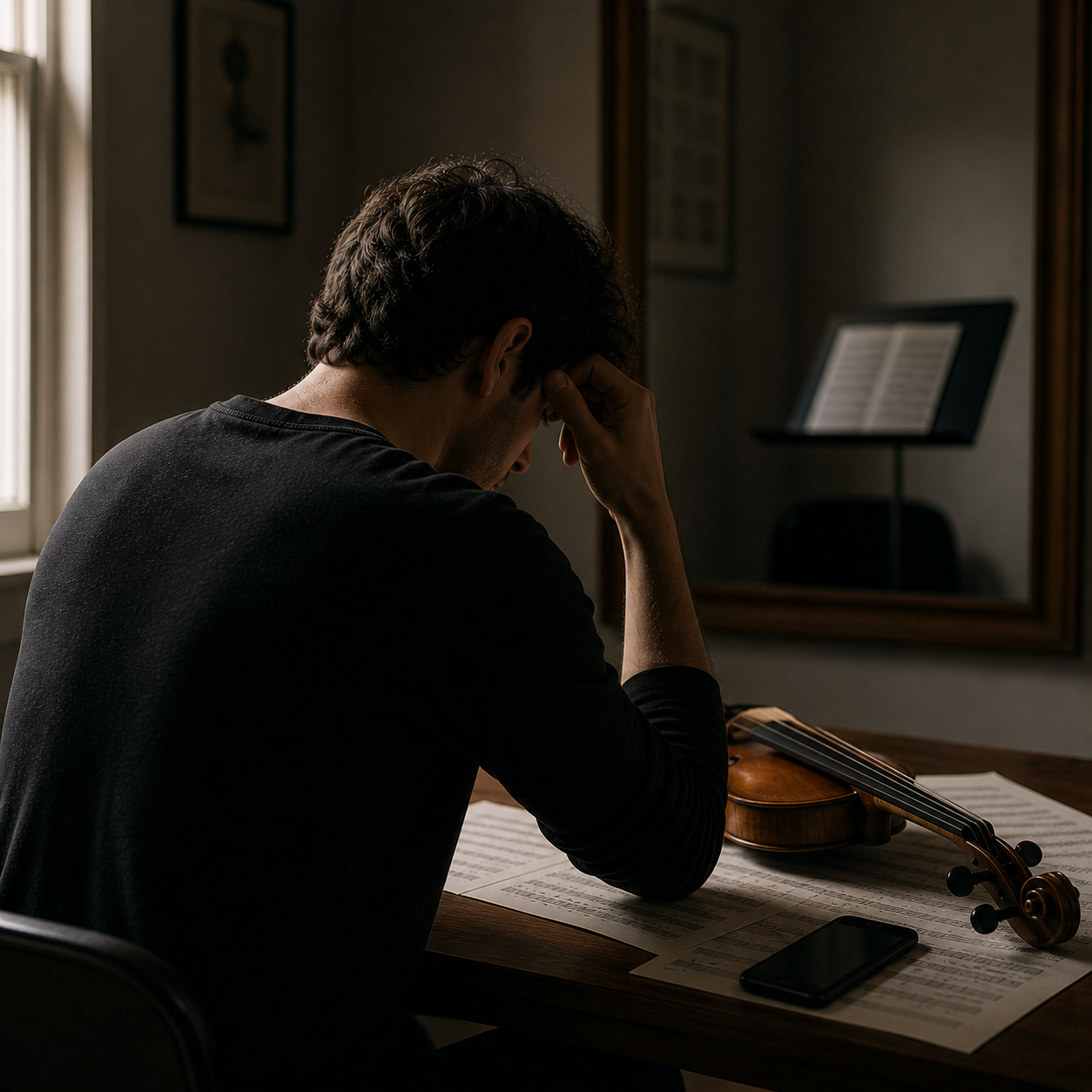
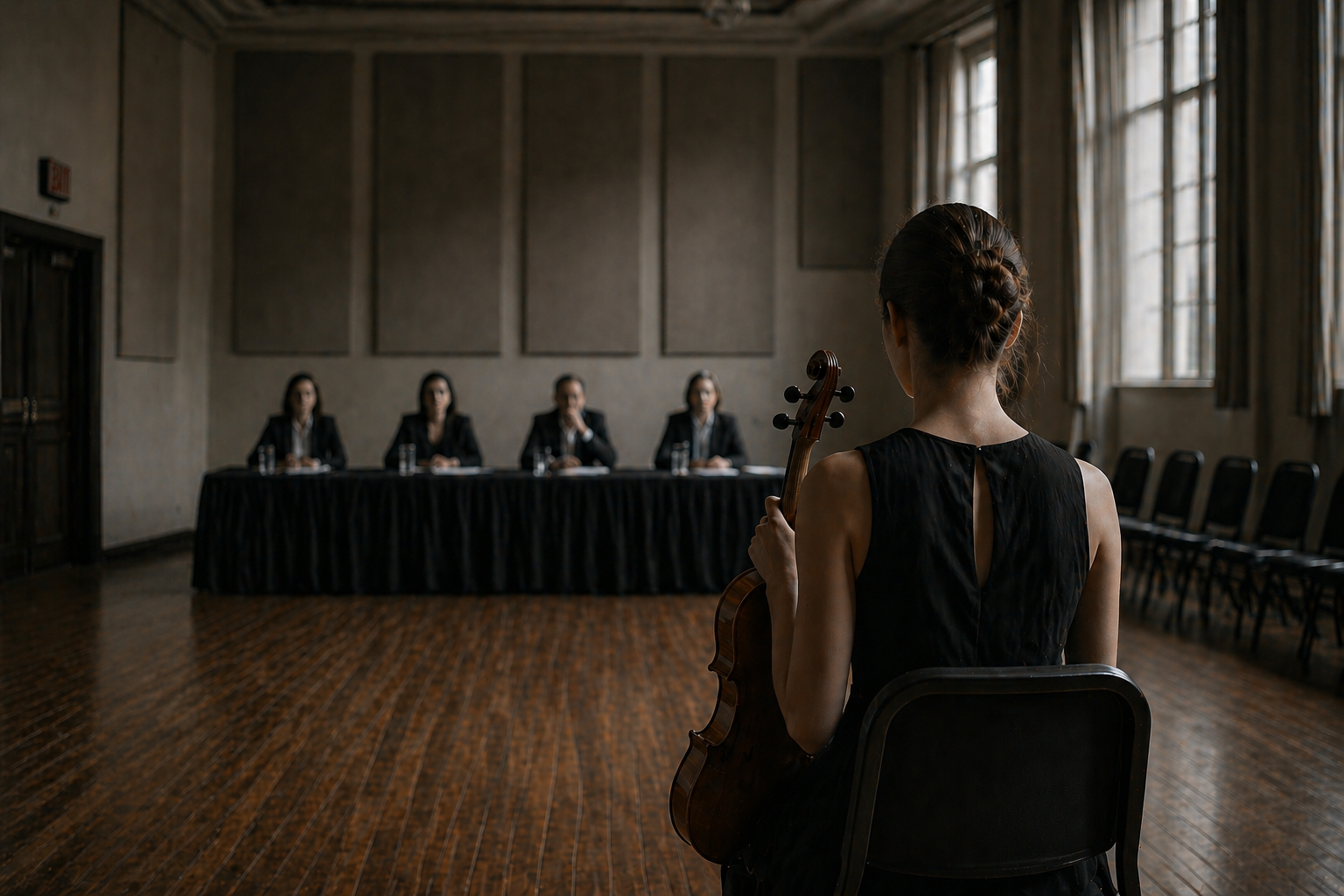
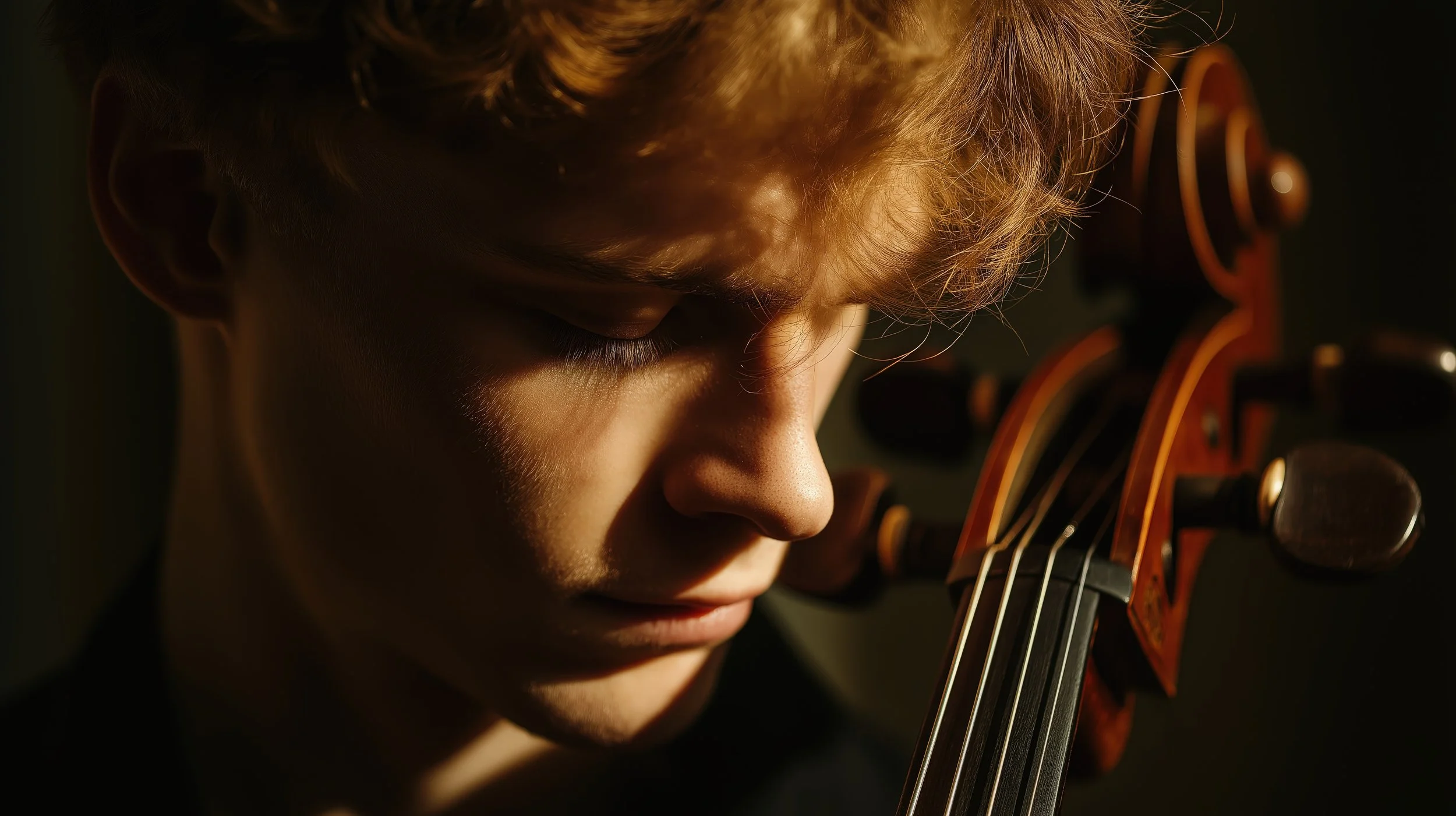
Most of what we carry into the practice room and the teaching studio was never examined.
This is where that examination begins.
FOR EDUCATORS, AND FACULTY
Posts that address teaching, the studio relationship, pedagogical language, and what forms under institutional pressure.
There is something we do before a big performance that we almost never talk about. We make it smaller than it is. This is not carelessness. It is a very specific kind of preparation. And it costs more than it saves.
We have spent decades treating Impostor Syndrome as a thought that needs correcting. It is not a distorted thought. It is a physiological strategy that is working exactly as it was designed to work. This piece names what that means, and why it changes everything about how we work with it.
Most people don’t seek somatic work out of curiosity. They come because tension, pain, or performance frustration won’t resolve.
When the semester, tour, or run of a show ends, many musicians expect relief. Instead, they feel depleted, flat, or collapsed.
This article breaks down the real differences between lessons, therapy, and coaching, and explains why coaching becomes essential once you’re ready to take responsibility for change.
Improvisatory presence is not the absence of preparation. It is what becomes possible when we feel steady enough to meet the people in front of us as they are.
This reflection explores what our bodies are actually doing beneath the surface, how we lose our range, and how we relearn belonging through shared space, curiosity, and honest connection.
Focus thrives in safety. For college students and young musicians, distraction is often less about discipline and more about survival.
Explore how somatic learning transforms information into embodied wisdom, and why curiosity, not compliance, is the heart of true teaching.
This post explores how widening awareness restores ease, flow, and connection.
Silence is often misunderstood as apathy — but under systems of oppression, it’s often a somatic survival response.
A colleague reached out today, unsettled. They said, “A famous teacher is here, and they’re teaching breathing by pushing on people’s stomachs.”
High functioning and chronically anxious are not opposites.
If you’ve spent years in the cycle of overwork, over-functioning (doing more than your share, staying in constant motion to cope), and quiet burnout, you may not remember what creativity feels like without pressure.
What we say about sensory appreciation is not only scientifically inaccurate. It is harmful.
When the cost of sustaining performance stops being invisible.
Why are we speaking more about the nervous system at mBODYed? Because embodiment without nervous system fluency can overwhelm an already exhausted system.
FOR PERFORMERS AND MUSICIANS
Posts that address the practice room, performance preparation, and what the body carries into performance.
There is something we do before a big performance that we almost never talk about. We make it smaller than it is. This is not carelessness. It is a very specific kind of preparation. And it costs more than it saves.
We have spent decades treating Impostor Syndrome as a thought that needs correcting. It is not a distorted thought. It is a physiological strategy that is working exactly as it was designed to work. This piece names what that means, and why it changes everything about how we work with it.
There is a moment in performance where things still sound right, but begin to feel tighter and less responsive. We start managing what we are doing instead of doing it.
Most people don’t seek somatic work out of curiosity. They come because tension, pain, or performance frustration won’t resolve.
When the semester, tour, or run of a show ends, many musicians expect relief. Instead, they feel depleted, flat, or collapsed.
Explore how somatic learning transforms information into embodied wisdom, and why curiosity, not compliance, is the heart of true teaching.
A colleague reached out today, unsettled. They said, “A famous teacher is here, and they’re teaching breathing by pushing on people’s stomachs.”
If you’ve spent years in the cycle of overwork, over-functioning (doing more than your share, staying in constant motion to cope), and quiet burnout, you may not remember what creativity feels like without pressure.
From our very first lessons, we are taught to transmit—not originate.
What would it be like to work in an environment where there was actually enough time to do the creative work expected of us, at the level expected of us?
When the cost of sustaining performance stops being invisible.
“Reclaim your identity and self-worth from institutions. This post explores how to belong to yourself through somatic awareness, self-validation, and embodied practice for artists, educators, and creatives.”
FOR ALEXANDER TECHNIQUE AND BODY MAPPING PRACTITIONERS
These posts engage directly with the pedagogical and theoretical questions that credentialed practitioners are already sitting with.
There is something we do before a big performance that we almost never talk about. We make it smaller than it is. This is not carelessness. It is a very specific kind of preparation. And it costs more than it saves.
We have spent decades treating Impostor Syndrome as a thought that needs correcting. It is not a distorted thought. It is a physiological strategy that is working exactly as it was designed to work. This piece names what that means, and why it changes everything about how we work with it.
The problem is not faulty sensation. It is constrained range.
Not every body arrives with equal access to belonging. This changes what teaching requires of us.
This article breaks down the real differences between lessons, therapy, and coaching, and explains why coaching becomes essential once you’re ready to take responsibility for change.
Improvisatory presence is not the absence of preparation. It is what becomes possible when we feel steady enough to meet the people in front of us as they are.
This reflection explores what our bodies are actually doing beneath the surface, how we lose our range, and how we relearn belonging through shared space, curiosity, and honest connection.
Focus thrives in safety. For college students and young musicians, distraction is often less about discipline and more about survival.
This post explores how widening awareness restores ease, flow, and connection.
Silence is often misunderstood as apathy — but under systems of oppression, it’s often a somatic survival response.
What we say about sensory appreciation is not only scientifically inaccurate. It is harmful.
Why are we speaking more about the nervous system at mBODYed? Because embodiment without nervous system fluency can overwhelm an already exhausted system.